
If your Rivian or Range Rover has paint protection film on it and the car needs body work, most shops have a problem they do not mention until the end. They can repair the panel. They cannot put the film back. So the car leaves their bay and goes somewhere else to be re-wrapped, which means a second shop, a second appointment, more time without your car, and a seam in the process where nobody owns the finished result.
Certified accident and collision repair — factory trained by both manufacturers
- Rivian Certified Collision Repair — factory trained and equipped for aluminum structure and the skateboard battery pack.
- Jaguar Land Rover Certified — aluminum-intensive body repair to factory procedure.
- XPEL Certified Installer — XPEL paint protection film applied in the same building, so film goes back on correctly after paint.
- OEM parts only — new parts from the dealer. We tell insurers up front, and it is very rare for us to fit aftermarket.
Enthusiast Auto Works is a factory-certified collision center for Rivian and Land Rover, and an XPEL Certified Installer. Both happen in the same building at 55B Plain Ave in New Rochelle. To our knowledge, we are the only collision facility in the tri-state area holding both certifications that also fits the film in-house — so a filmed car goes through structural repair, refinish, and re-wrap without ever leaving the property.
Get an estimate for your Rivian or Land Rover — or call 914-630-1668. Tell us whether the car already has film on it; it changes the plan.
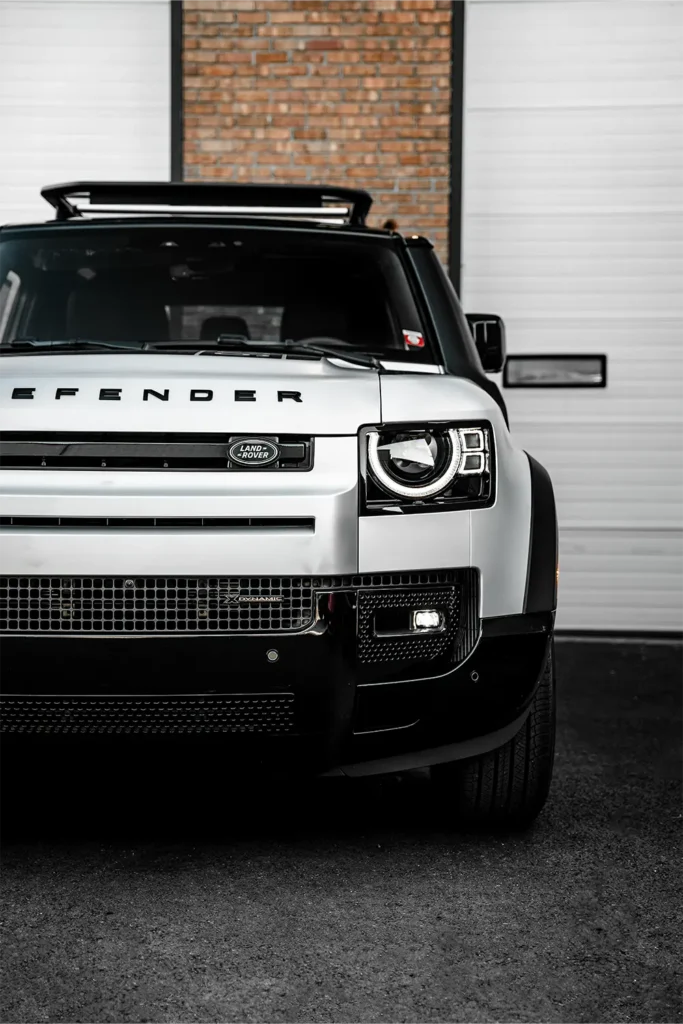
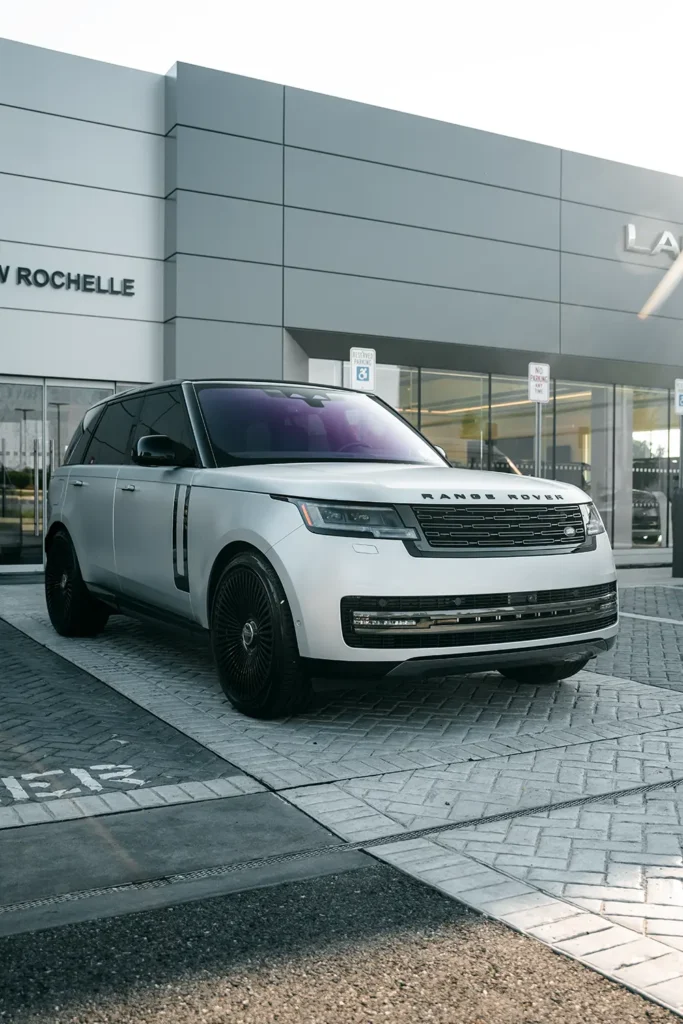
What actually happens to the film during a collision repair
This is the part that gets skipped in most estimates, so here it is plainly.
Film has to come off any panel that is being worked. It cannot survive panel repair, and it certainly cannot survive a paint bake — the heat will lift edges and distort the adhesive. So the film on the damaged area is removed and discarded. It is not reusable.
Once the panel is repaired or replaced and refinished, that panel is bare. New film has to be cut to that specific panel and laid over fresh paint. Three things make this harder than filming a new car:
- Fresh paint needs to outgas. Film applied too early over new refinish can trap solvent and cloud. The repair schedule has to account for it, which a shop that does not install film has no reason to think about.
- The surrounding film is older than the new film. On a car that has been wearing film for three or four years, a brand-new panel of film next to weathered film can read differently in direct light. Deciding how far to blend the re-wrap is a judgment call, and it is one that should be made by the people doing both jobs.
- Edges and wrapped returns have to line up. Where film tucks behind a panel edge or meets a body line, the new work has to match the old pattern or the car looks re-done.
When one shop repairs and another re-wraps, none of that is coordinated. The body shop schedules for its own calendar, the film shop inherits whatever paint condition it is handed, and if the result is wrong each one can point at the other. Doing both means one schedule, one standard, and one company answering for how the car looks when you collect it.
Why the factory certification matters on these two vehicles specifically
Land Rover and Range Rover
Modern Land Rover bodies are aluminum-intensive. That is not a detail — it changes the entire repair method. Aluminum structures are joined with rivets and structural adhesive rather than conventional welding, the bonding has to cure to specification, and aluminum work has to be done in an area kept separate from steel to avoid cross-contamination, which causes corrosion. The tooling is dedicated and the procedures are published by the manufacturer. Certification means we hold that equipment, our technicians carry the training, and the repair follows the documented method rather than an approximation of it.
Rivian
A Rivian brings a different set of constraints. There are defined procedures for handling and de-energizing the high-voltage system before structural work begins, the body mixes aluminum with high-strength steel in ways that dictate where and how it can be repaired, and the driver assistance sensors have to be recalibrated after the work is finished — a bumper cover or windshield that has been off the car can leave a camera or radar looking at the world a fraction of a degree off, and a fraction of a degree matters at highway speed.
These are both relatively new-to-market repair disciplines. Being certified for both, in one shop, is not common.
Four things about these cars that surprise people
1. Aluminum does not spring back. It work-hardens.
Steel has a degree of elastic memory, which is why a skilled tech can often pull a steel panel back toward where it started. Aluminum behaves the opposite way. Bend it and it gets harder and more brittle at exactly the point it bent. So on an aluminum-bodied Range Rover, panels that would be straightened on a steel car are frequently replaced instead. Heat is just as unforgiving: go outside the specified window and the panel is permanently weakened, with nothing on the surface to show for it.
2. What actually destroys an aluminum body is steel dust.
Aluminum does not rust. But when steel particles land on aluminum and moisture gets in, galvanic corrosion begins — underneath the paint, where you cannot see it. That is the real reason certified aluminum repair demands a physically separated work area, its own dust extraction, and tools that never touch steel. A shop grinding steel in the same bay can hand a Range Rover back looking flawless and have it bubbling a year later.
3. One degree of camera error is most of a lane.
Take off a windshield or a bumper cover and the cameras and radar behind them need recalibrating before the car is driven. A camera aimed one degree off is looking roughly five feet to the side at 300 feet, and about ten feet at 600 — close to a full highway lane. The car looks repaired. It is reading the road from the wrong place, and the driver has no way to tell.
4. On these EVs, the floor is structural.
On Rivian’s skateboard platform the battery pack is part of the structure, not a box bolted underneath it. An underbody strike that would be a cosmetic scrape on a combustion SUV becomes a structural and high-voltage question at the same time. There is a defined inspection procedure for exactly this, and it is not something to eyeball.
OEM parts, and what happens when an insurer pushes back
We repair with new OEM parts from the dealer. That is the standard, not an upgrade we offer.
We tell insurers this at the outset so it is not a surprise mid-repair. If an insurer denies an OEM part, we first look for a way to make it work for you without money coming out of your pocket. If we cannot, we call you and talk it through rather than quietly substituting something else. It is very rare for us to fit aftermarket, and it only happens in special circumstances with your knowledge. You can read more about how OEM and aftermarket parts differ under New York rules.
The other half of this: film before the first drive
The same building handles the opposite situation. A new R1S, R1T, Range Rover, Sport, Velar or Defender is at its most vulnerable in the first week, before anyone has thought about protection.
The right sequence on a new vehicle is inspection first, paint correction if the finish needs it, then film — because film is optically clear and locks in whatever is underneath it. Filming over swirls or dealer-lot wash marks preserves them for the life of the film.
Coverage runs from a partial front through full front to full body, and there is a matte option in XPEL STEALTH that changes a gloss car to satin while protecting it. Our paint protection film guide walks through the coverage levels and what each one leaves exposed, and there are dedicated pages for film on a Rivian and film on a Range Rover.
Local dealers across Westchester and in Greenwich send us their higher-end cars for film before customer delivery. Dealers are repeat, high-volume and unsentimental about quality — they stop sending cars the moment the work slips. If you are collecting a new vehicle, it is worth asking the dealer to send it here before you take delivery.
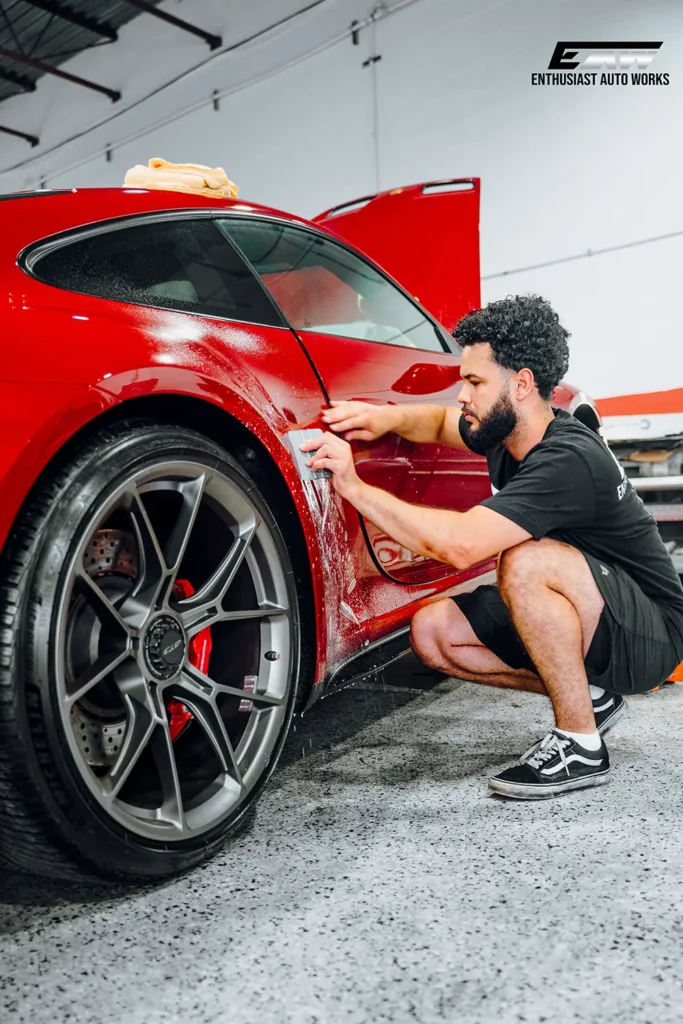
Two warranties, and what each one actually covers
XPEL warrants the film itself for ten years against yellowing, cracking, blistering and delaminating. It is a defect warranty, not damage insurance — rock and debris impact is specifically excluded, because absorbing that impact is the film doing its job. Registration is required, and without it there is no coverage at all. We register every installation and give you the confirmation.
We warrant our own installation for labor. Anything that comes from how we fitted the film — an edge that lifts, a mark, a corner that has let go — you bring the car back and we put it right. Impact is not covered, for the same reason XPEL excludes it.
We ask you to come back for a check-up about two weeks after a clear film install. If film is going to lift, it lifts in the first two weeks while the adhesive is still curing into the panel edges. After that it very rarely happens at all. Most shops do not ask you to come back. We would rather see the car early than hear about it in year two.
Because we register every installation, the coverage travels with the car. If you move out of state, you can take it to any XPEL certified installer in the country. There is more detail in our breakdown of what the XPEL warranty covers.
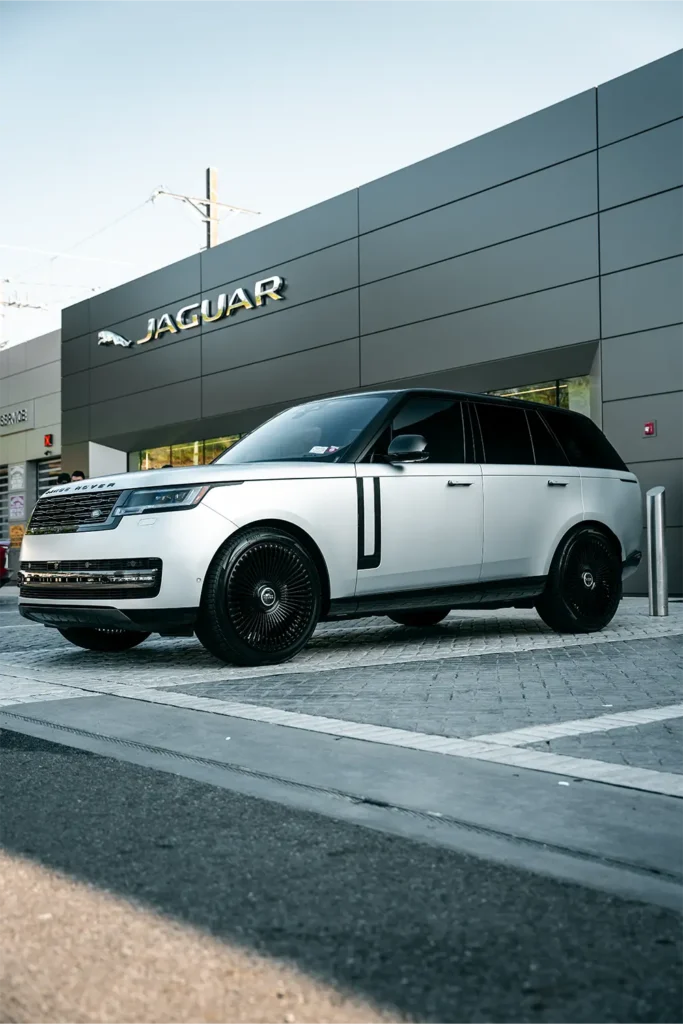
Working with your insurer
We work with all insurance carriers and handle the claim process for you. Bring us the claim number and we will deal with the adjuster, the supplements and the documentation. What we will not do is let the claim dictate a repair method the manufacturer does not sanction on a certified vehicle.
Where we work
We are at 55B Plain Ave in New Rochelle, minutes from I-95 and the Hutchinson River Parkway. Customers come to us from across Westchester — New Rochelle, Larchmont, Mamaroneck, Rye, Scarsdale, Bronxville, Harrison, White Plains — and from lower Fairfield County including Greenwich, Old Greenwich, Riverside, Cos Cob, Darien, New Canaan and Stamford. A number come across from Bergen County, New Jersey, because a certified shop that also does film is worth the bridge.
If your car already has film and has been in an accident, the page you probably want next is collision repair for cars with paint protection film, which covers the whole process in detail.
Common questions
My Rivian has full-body PPF and was rear-ended. Do I lose all the film?
No. Only the film on panels being worked comes off. Undamaged panels keep theirs. Part of the conversation at estimate is deciding how far to extend the re-wrap so the finish reads as one car rather than a patch.
Will my insurance pay to replace the film?
Often, yes — film on a damaged panel is part of restoring the vehicle to pre-loss condition, and it belongs in the estimate. We document it and argue it. Outcomes vary by carrier and policy, and we will tell you honestly where yours stands.
How long after paint before the film goes on?
Fresh refinish needs time to outgas before film is applied. We build that into the schedule rather than rushing it, and we will tell you what it means for your collection date.
Are you certified for other brands?
Yes. Alongside Rivian and Land Rover we are certified for Jaguar, Genesis, Infiniti, Nissan, Kia and Stellantis. We repair most other high-end marques as well, and our technicians carry manufacturer training across them, though we are careful to only claim formal certification where we actually hold it.
Can you do the film without the collision work?
Of course. Plenty of cars come to us purely for film, coating or tint and never need the body shop at all.
Get an estimate
Tell us the vehicle, what happened, and whether it currently has film on it. If you have photos and a claim number, include them. We will come back with a plan for the repair and the film as one job, on one schedule.
Which one are you?
Pick the one that fits and we will take it from there.
If your vehicle has paint protection film on it
Most collision shops cannot finish the job. They can repair and repaint the panel, but they cannot put the film back, because that is a separate trade with a separate certification. The car goes to a second facility afterward — a second drop-off, a second wait, and nobody answerable if the result does not match.
We do both in the same building. To our knowledge, Enthusiast Auto Works is the only collision facility in New York, New Jersey or Connecticut holding Rivian collision certification, Land Rover collision certification and XPEL Certified Installer status at the same time. A filmed vehicle is stripped, repaired, refinished, cured and re-filmed here without moving.
Other certified shops in the area send us their customers’ cars for the film work once their paint is done. If the film has to come back to us anyway, you can simply start here.
How collision repair works on a car with paint protection film