
Tesla collision repair usually comes down to three things: what the published limits allow on large castings, how the high-voltage system is handled, and whether the cameras are actually aimed right afterward.
This page is for Tesla owners in Westchester and Greenwich, driving anything from a Model 3 or Model Y to a Model S or X. Tesla repair capacity is limited and lead times can be long, so a lot of owners end up asking the same questions. Here are the answers.
We aren’t certified by Tesla, but we have all of the tooling to repair them properly.
What’s different about a Tesla body
It changes by model, and it affects both the repair plan and the total loss math.
| Model | Body | What it means |
|---|---|---|
| Model S and X | Aluminum-intensive | Aluminum work stays in a separate area, so steel contamination can’t cause corrosion under new paint. |
| Model 3 | Aluminum and high-strength steel | Each material follows its own repair method. |
| Model Y | Aluminum and high-strength steel, with large single-piece aluminum castings | A casting isn’t sectioned or straightened like a built-up structure. Often the answer is replace, within defined limits. |
| Structural-pack cars | The battery is part of the floor, not bolted underneath it | Changes the repair plan and the inspection after any underbody impact. |
When the numbers don’t work
Casting replacement is expensive, so Tesla claims with structural damage can end up as a total loss. If it points that way, we’ll tell you plainly instead of starting a repair that shouldn’t happen. We handle total loss claims start to finish.
Camera calibration is the part that gets skipped
Tesla’s driver assistance is camera-led, with cameras in the windshield housing, the B-pillars, the front fenders and the rear. With no separate radar array to fall back on, camera aim is the whole basis for how the car measures what’s around it.
Replace a windshield, a mirror, a fender or a bumper cover that a camera mounts to or looks through, and the system needs recalibrating. We do ADAS calibration in-house. More in ADAS calibration after a collision.
Ready isn’t the same as right
A Tesla can finish a calibration cycle on its own and report itself ready. That’s not the same as verified aim, so we check it instead of assuming the dashboard is telling the truth.
Panel gaps, paint and parts
In our shop
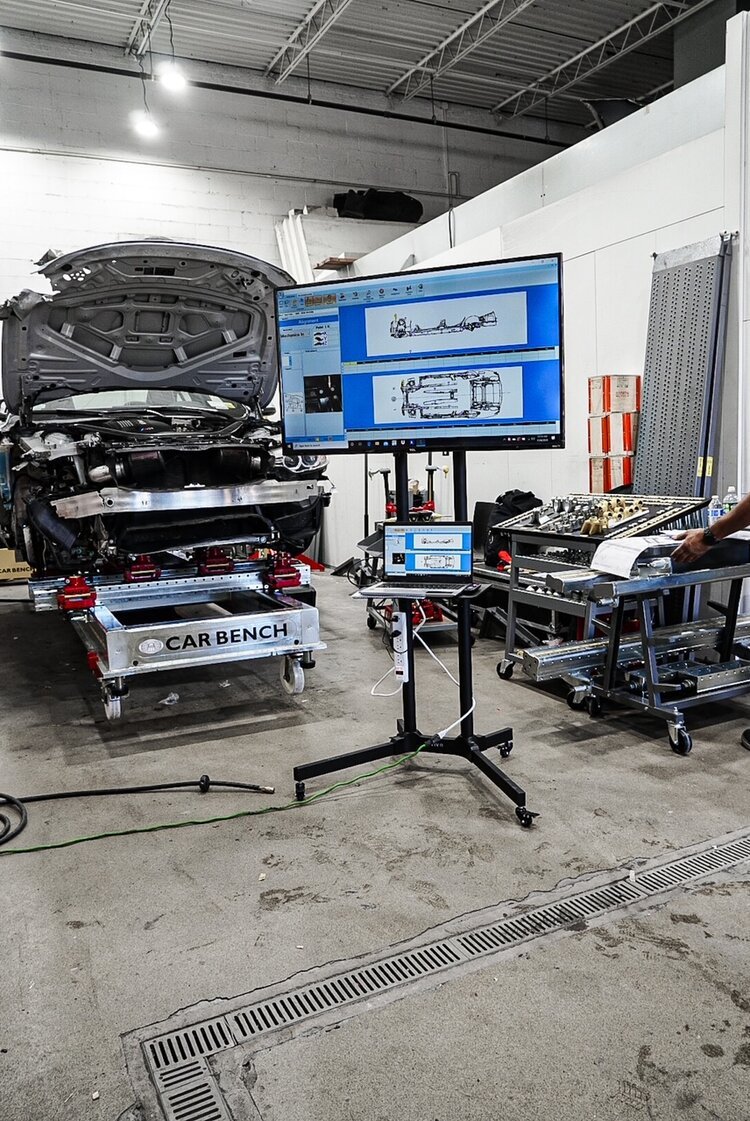
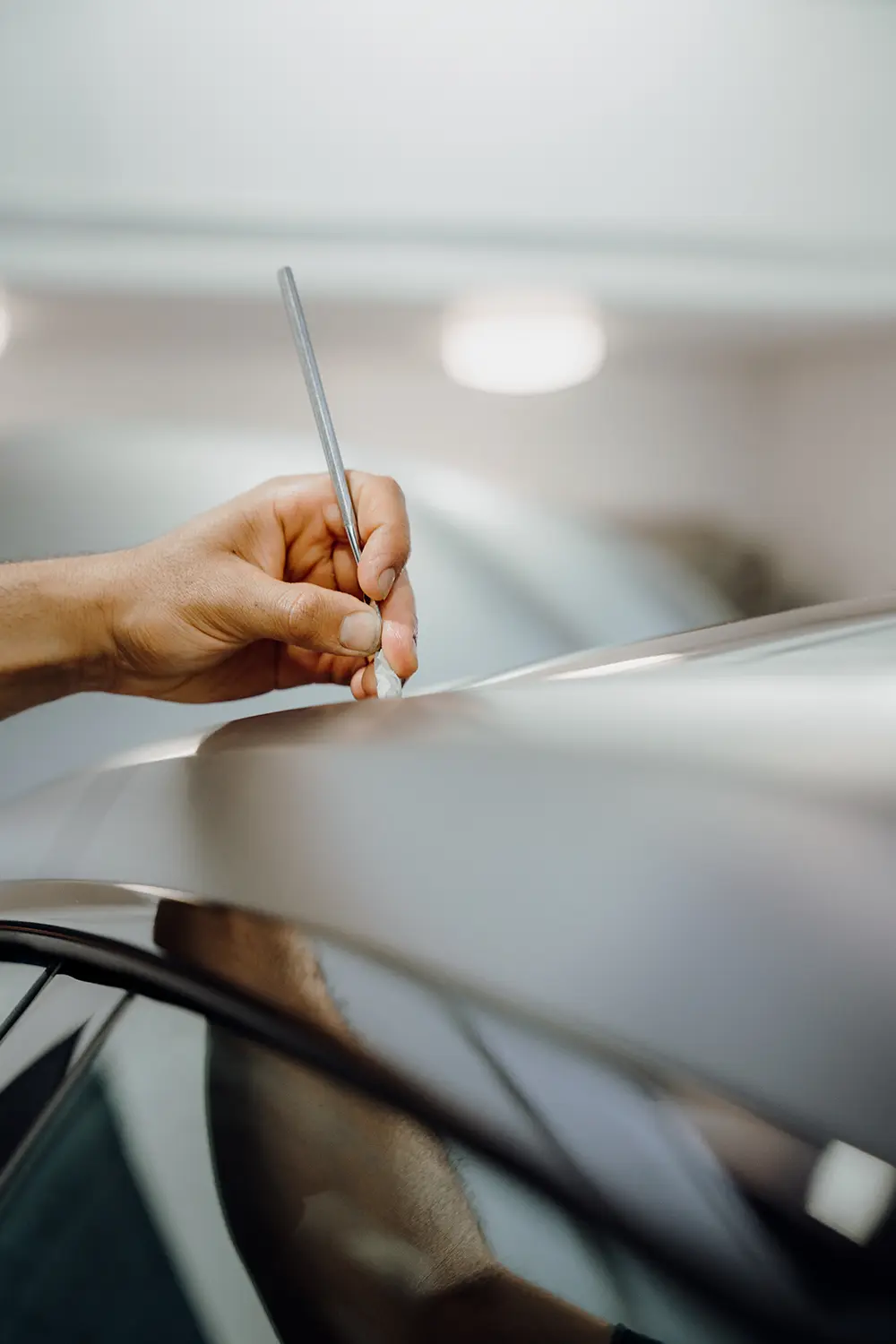
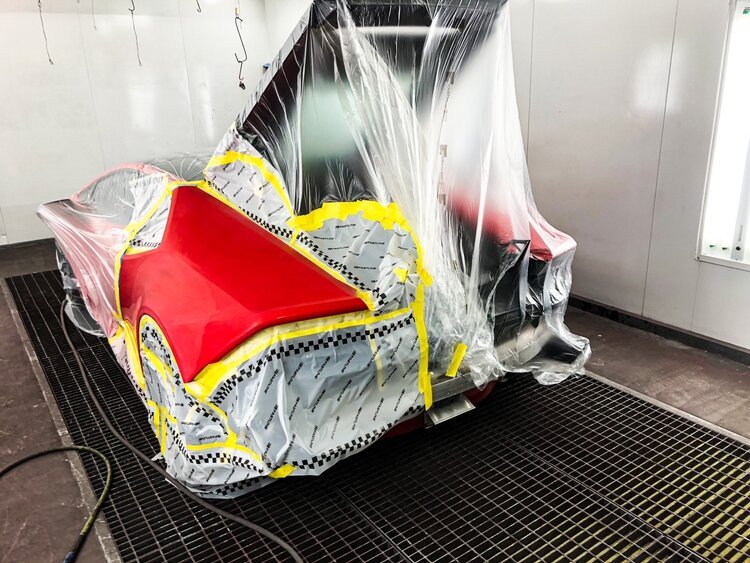
We don’t have Tesla photos up yet. These show the shop and the work every car goes through.

How the repair runs
Here’s how timing works on a typical job. The steps stay the same.
Pre-scan and tear down
We scan the car and take apart what we need to see all of the damage.
Isolate if needed
High-voltage isolation to procedure before structural work near the pack or wiring.
Plan from the procedure
We write the repair from Tesla’s published procedure and order new OEM parts.
Structure, panels and paint
Aluminum kept apart from steel. Measured reassembly and blended paint.
Calibrate and verify
In-house calibration, then we verify the aim.
Post-scan and delivery
We post-scan the car before it leaves.
How the claim works
You don’t have to run the claim yourself. At drop-off you sign three forms, and we act as your claim concierge from there.
New OEM parts only
We use new OEM parts from the dealer, and we tell insurers that up front. If an insurer denies an OEM part, we look for a way to make it work without you paying out of pocket. If that fails, we call you and decide together. More in OEM vs aftermarket parts in a New York claim.
Your insurer, your choice of shop
In New York you choose your own shop. That’s NY Insurance Law § 2610. We are a preferred repair shop for Berkley One, which helps streamline the whole process. We have a direct representative we deal with, and that lets us get to work on your car right away. We also work with Chubb, PURE, AIG Private Client, Hagerty, Erie and Cincinnati, and GEICO claims are welcome.
- If the car can’t be driven, call us before it goes to a storage yard. Towing is free on all insurance claims.
- If the car is a total loss, we handle the claim start to finish.
- On a repairable claim, we can set you up with a diminished value representative if the claim qualifies.
Two arguments on most Tesla claims
- Casting limits. Insurers sometimes push for a repair the published procedure doesn’t permit. The answer is the procedure itself, attached to the supplement.
- Calibration. It’s a real procedure with real time attached, and generic allowances don’t cover it.
About our certifications
We aren’t certified by Tesla, but we have all of the tooling to repair them properly. We repair every Tesla to the procedure the manufacturer published, with new OEM parts, in a separate aluminum work area with a measuring and welding setup built for multi-material structures. We hold manufacturer collision certification with Land Rover, Jaguar, Rivian, Genesis, Infiniti, Nissan, Kia and Stellantis; see what we are certified for.
Tell us about your Tesla
Send the car, what happened, and photos if you have them. If there’s a claim number, include that too.
Request an Estimate
Tell us about the car and what happened. We call back the same day. On a busy day, by the next morning at the latest.
Common questions
No. Under New York law the choice of repair shop is yours. What matters is that the shop works to the published procedure, can repair aluminum and actually verifies calibration.
No. We are not certified by Tesla, but we have all of the tooling to repair them properly, and we repair Teslas to the published procedure.
Not necessarily. Self-reported readiness is not the same as verified aim.
Only within the limits Tesla publishes. Beyond those it is replaced, and that can turn a Model Y claim into a total loss conversation.
Parts availability is usually the biggest factor. We order on approval and tell you the real schedule.
Yes. We are an XPEL Certified Installer, and collision and film are both done here.
Related reading
Where we work
Our shop is in New Rochelle, about 15 minutes or less from Scarsdale. Customers come to us from:
Pickup and delivery
Free locally, out to about Greenwich, CT. Farther out may cost extra, so ask us.
Enthusiast Auto Works
55B Plain Ave, New Rochelle, NY 10801
Open Monday to Friday
(914) 630-1668 · Contact us
We repair with OEM parts. Only.
Enthusiast Auto Works fits new original parts from the manufacturer’s dealer network. Not “like kind and quality”, not aftermarket copies, not a used panel off a donor car. Barring genuinely exceptional circumstances, that is what goes on your vehicle.
We also tell your insurer this before the estimate is written, rather than arguing about it afterwards. That one step is the reason it is rare for the question to become a fight at all.
Why it matters more than it sounds:
- Structural parts are engineered, not shaped. Reinforcement bars, crush cans, rails and radiator supports are designed to deform in a particular sequence at a particular load. A part that looks identical and deforms differently changes how the car protects you in the next collision, and nothing about the finished repair would reveal it.
- Sensors are measured in millimeters. Radar sits behind bumper covers and grilles, cameras sit in windshields and mirrors. If the mounting geometry is slightly off, calibration either fails or succeeds against the wrong reference. The second outcome is the dangerous one.
- Fit, coating and corrosion. Panel gaps, steel thickness and factory corrosion protection differ on copies. You see the gap immediately; you see the corrosion in three winters.
- Resale. A documented aftermarket panel is something a serious buyer’s inspector finds and prices in. On a premium car that is real money.
If your insurer pushes back. Most estimates arrive with aftermarket substitutions already written in. We write the supplement from the manufacturer’s published repair procedure with the relevant pages attached and make the case for the original part. Documented procedure moves adjusters in a way that opinion does not. If a carrier still will not pay, our first move is to find a way to make the repair work without you going out of pocket. If we cannot, we call you, explain exactly where the claim stands, and you make the decision. What does not happen is an aftermarket part going quietly onto your car while you find out later.