
Your Range Rover is not a steel car, and that changes everything
When a Range Rover, a Defender, a Discovery or a Jaguar F-Type comes off a hook and into a body shop, the first question that matters isn’t how bad it looks. It’s whether the shop can safely put it back together.
Jaguar Land Rover moved to aluminum-intensive architecture years ago. The current Range Rover’s body is predominantly aluminum, joined with self-piercing rivets, flow-drill screws and structural adhesive rather than spot welds. So is the Defender. So is most of the Jaguar line.
That single material decision invalidates most of what a conventional body shop knows how to do.
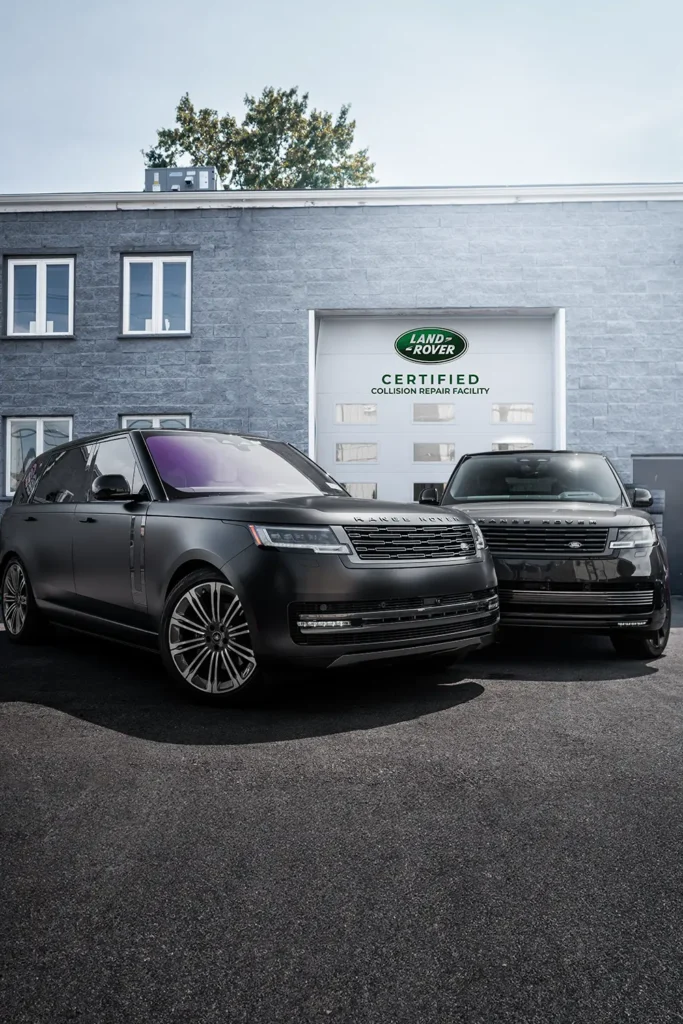
Why aluminum can’t be repaired like steel
It doesn’t stretch and come back. Steel has ductility that lets a technician heat it, pull it, and massage a damaged panel back toward its original shape. Aluminum work-hardens as it deforms. Pull it too far and the crystalline structure changes permanently — the metal becomes brittle at exactly the point that’s supposed to absorb the next impact. Worse, it doesn’t crack visibly when this happens. It looks fine and behaves differently.
Heat destroys it. Steel tolerates a fairly wide heat window. Aluminum has a narrow one, and exceeding it anneals the alloy and drops its strength permanently. JLR publishes specific maximum temperatures and dwell times for every operation. A technician working by feel rather than by procedure will exceed them.
It isn’t welded — it’s bonded and riveted. Structural joints on these vehicles use self-piercing rivets driven by a calibrated tool at a specified force, combined with a two-part structural adhesive applied to a specified bead geometry and cured on a specified schedule. Get the rivet spec wrong or the adhesive cure wrong and the joint’s crash performance is compromised — again, invisibly.
It can’t touch steel. This is the one most owners have never heard. Aluminum particulate in contact with steel sets up a galvanic cell, and the aluminum corrodes. A shop that grinds aluminum in the same bay where it grinds steel is contaminating both. The certification programs require a physically separate, dedicated aluminum repair area with its own tooling, its own dust extraction and its own consumables — not a curtain in the corner, a separate room.
It needs different consumables end to end. Dedicated aluminum sanding discs, files, hammers and dollies, and a dedicated vacuum. A steel file used on aluminum embeds steel particles in the surface. Those particles corrode under the paint two years later.
What JLR certification actually requires
We hold the Jaguar Land Rover Certified Collision Repair Center designation, and it’s worth explaining what that took, because “certified” is a word a lot of shops use loosely.
- Brand-specified tooling. Riveting systems, aluminum-specific welding equipment, JLR-approved measuring and three-dimensional frame equipment, and adhesive dispensing to spec. This is a six-figure equipment commitment, which is precisely why the certified network is small.
- A dedicated aluminum repair area. Physically isolated, separately extracted, with segregated tooling — as above.
- Named, factory-trained technicians. Not “the shop is certified” — specific individuals hold specific JLR credentials, renewed on a schedule.
- Access to JLR’s repair procedure database. Every operation on a modern Land Rover has a published procedure. Certified shops are required to pull and follow the current one for each job rather than working from experience.
- OEM parts for structural and safety components.
- Ongoing audit. The certification is re-verified, not granted once.
You can confirm any shop’s status on Land Rover’s own certified body shop locator rather than taking a website’s word for it — including ours.
One note on scope: JLR certification covers Jaguar and Land Rover. We also hold Rivian certification, along with OEM certifications for Genesis, Infiniti, Kia, Nissan and the Stellantis brands. We repair Porsche, Ferrari, Lamborghini, McLaren, Bentley, Mercedes-AMG, BMW M, Tesla and Lucid as well, with technicians who hold aluminum, structural and high-voltage credentials — but we are not factory-certified by those manufacturers and we don’t say we are.
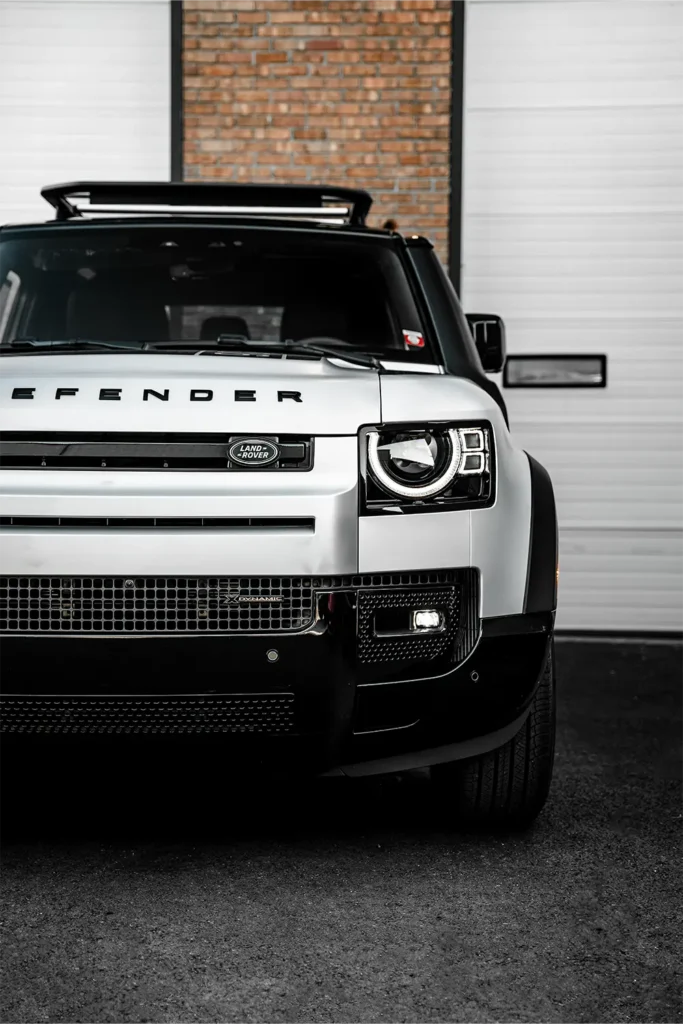
The models we see most
Range Rover (L460) and Range Rover Sport (L461) — the MLA-Flex architecture is aluminum-intensive and mixed-material. Front-end collisions frequently involve the aluminum crash structure plus the forward radar and camera array behind the grille. Nearly every one of these repairs ends with an ADAS calibration.
Range Rover Velar and Evoque — smaller but still aluminum-intensive, and both are dense with sensors in the bumpers.
Defender (L663) — aluminum monocoque despite the traditional look. The side-mounted and roof-mounted accessory hardware that owners add creates its own repair complications after an impact, because the mounting points are structural.
Discovery and Discovery Sport — mixed-material, and the rear architecture on the Discovery makes rear-impact repairs more procedure-dependent than they look.
Jaguar F-Pace, I-Pace, F-Type, XF — the I-Pace adds a high-voltage battery pack to the aluminum problem, which means high-voltage safety protocol and a documented pack inspection on top of everything else.
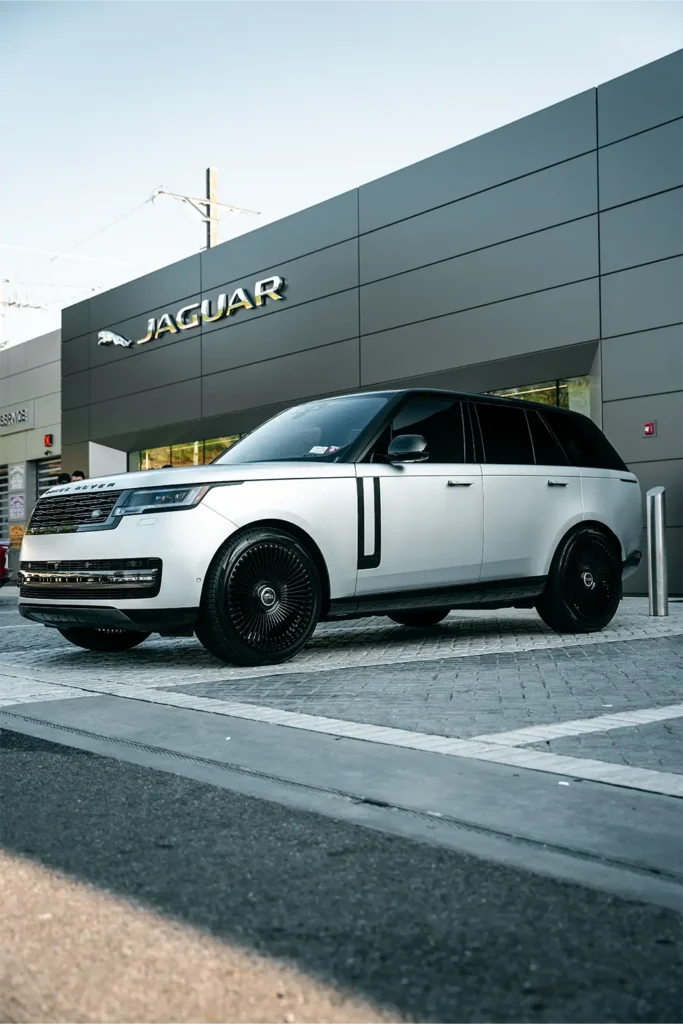
ADAS: the part of the repair you can’t see or test-drive
Every current Land Rover and Jaguar carries a stack of driver-assistance systems: adaptive cruise, lane-keep assist, blind-spot monitoring, autonomous emergency braking, 3D surround camera, and on Range Rovers the ClearSight systems.
Those run off a forward radar behind the grille, a camera behind the windshield, cameras in the mirrors and tailgate, and ultrasonic sensors through the bumper covers. In other words: the exact parts that get removed, replaced or repainted in a front or rear collision.
Two things owners consistently underestimate:
Aim tolerance is measured in fractions of a degree. Refit a bumper a couple of millimeters off and the forward radar’s aim shifts. At the distance the system is actually looking — 150 meters or more — a fraction of a degree is several lanes of error.
The car will not tell you. There’s no fault code for “correctly installed, incorrectly aimed.” The system boots, self-checks, reports healthy, and misreads the road. You find out when the adaptive cruise brakes for a car in the next lane, or doesn’t brake for the one in yours.
Post-repair calibration is a mandatory, documented operation. JLR specifies static calibration (targets on a level floor at measured distances under controlled lighting), dynamic calibration (a defined drive cycle), or both. A certified shop performs it and hands you the report with the invoice. Ask for that report. If a shop can’t produce one, the calibration didn’t happen.
Insurance, OEM parts, and your right to choose
Your insurer cannot require you to use a particular shop. Under New York Insurance Law § 2610(a), “no insurer providing collision or comprehensive coverage therefor shall require that repairs be made to such vehicle in a particular place or shop or by a particular concern.” Subsection (b) additionally bars the insurer from recommending a shop unless you ask. Connecticut and New Jersey have comparable protections. Full explanation here.
This matters more on a JLR vehicle than on most cars, because the pool of facilities that can correctly repair an aluminum structure is genuinely small, and “preferred network” membership is built around labor rates rather than aluminum capability.
Parts. Some policies permit aftermarket or recycled parts. On a certified JLR repair, structural aluminum and safety components must be genuine JLR — the procedure requires it and so does the certification. If your policy has an aftermarket parts clause, check whether you can add an OEM parts endorsement.
Supplements. On aluminum vehicles, hidden damage is common and the initial estimate written from visible damage is almost always low. A proper teardown early in the process finds it, and the supplement gets negotiated with the insurer. This is normal.
We handle the claim, the teardown documentation and the supplement negotiation directly with your carrier.
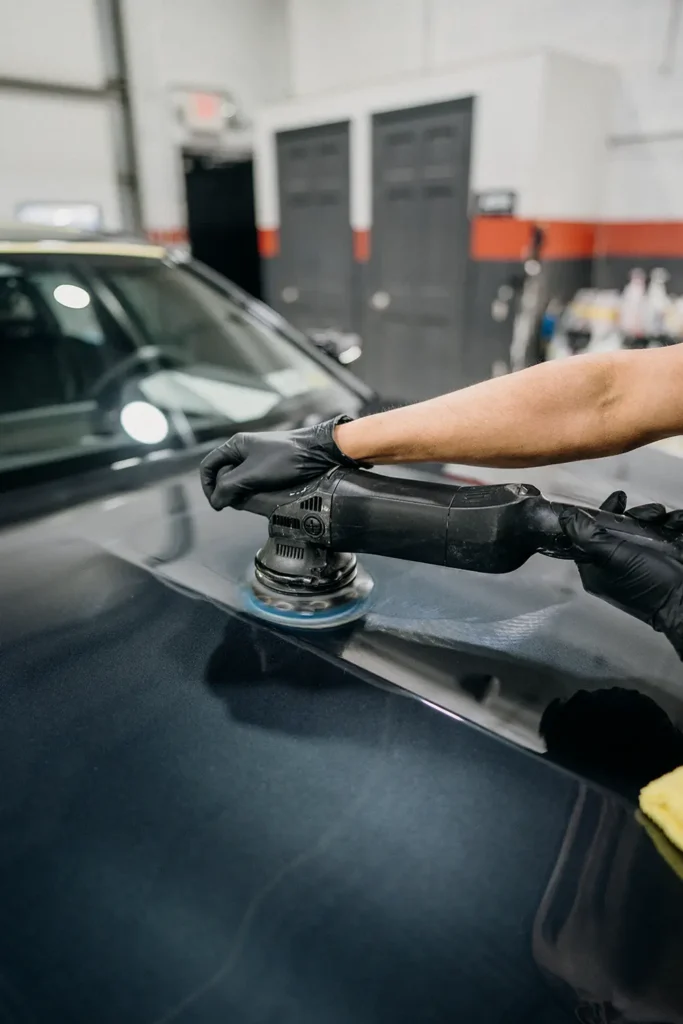
While it’s here: finishing the car properly
A Range Rover that comes out of a structural repair has one or two panels of new paint against panels that have spent three winters on I-95. The color match can be perfect and the repair will still read, because the new paint is glossier than the old paint next to it.
Two steps close that gap, and they’re much cheaper to do while the car is already in a clean paint environment than as a separate trip two months later:
Paint correction on the untouched panels, bringing the whole vehicle to a consistent gloss level rather than leaving a bright patch.
Paint protection film over the refinished and corrected surfaces. This one is specific to aluminum cars: a rock chip on an aluminum hood isn’t just cosmetic, it’s an initiation point for corrosion, and Westchester and Fairfield County roads are treated with liquid magnesium chloride brine from December through March. More on choosing film here.
One timing rule: fresh paint needs to outgas before film goes over it. The correct order is refinish, cure, correct, film — and a shop that controls both ends manages that interval instead of guessing.
Frequently asked questions
You are not legally required to, and you can use any shop you choose. But on an aluminum-structural vehicle, the certification is a meaningful proxy for whether the facility has the dedicated aluminum area, the riveting and bonding equipment, the current repair procedures and the calibration capability the repair actually requires. On structural damage, it is the difference that matters most.
Cosmetic work is typically one to two weeks. Structural repair involving aluminum rivet-bonding and ADAS recalibration commonly runs three to six weeks. Parts availability is usually the limiting factor — some JLR components ship from the UK and a single backordered item can extend the timeline.
Any shop can attempt it. Doing it correctly requires a physically separated aluminum work area to avoid galvanic contamination from steel dust, aluminum-specific tooling and consumables, calibrated self-piercing rivet equipment, structural adhesive applied and cured to specification, and access to JLR’s published procedures. Most general collision shops have none of this.
A properly documented repair using genuine JLR parts and published procedures should not affect your factory warranty on unrelated systems. An improper repair — wrong parts, wrong joining method, no calibration — can give a manufacturer grounds to deny a related claim, which is a substantial reason to keep the documentation.
It depends on your policy. Many policies permit aftermarket or recycled parts for non-structural components. Structural and safety parts on a certified repair must be genuine JLR. An OEM parts endorsement on your policy removes the ambiguity and is typically inexpensive relative to the vehicle’s value.
Yes — the JLR certification covers both marques, including the F-Pace, F-Type, XF, XE and the electric I-Pace.
Bring it to a shop that’s set up for it
Enthusiast Auto Works is a Jaguar Land Rover Certified Collision Repair Center in New Rochelle, New York, with a dedicated aluminum repair area, JLR-specified structural equipment, in-house ADAS calibration, factory-trained technicians, and an XPEL installation bay for putting protection back on the car before it leaves.
Free pickup and delivery across Westchester, the Bronx, Manhattan, lower Fairfield County and Bergen County.
55B Plain Ave, New Rochelle, NY 10801 — (914) 630-1668
Start a claim · JLR certification details · The complete accident repair guide
Where we come to you
We are at 55B Plain Ave, New Rochelle, NY 10801, and a Land Rover or Range Rover repair does not mean you have to drive the car to us. Free pickup and delivery covers roughly a forty-mile radius, and the vehicle does not have to be drivable.
Westchester County: New Rochelle, Larchmont, Mamaroneck, Rye, Harrison, Scarsdale, Bronxville, Eastchester, Tuckahoe, Pelham, White Plains, Mount Vernon, Yonkers, Port Chester, Purchase, Armonk, Chappaqua, Bedford and Katonah.
New York City: Manhattan, the Bronx, Riverdale and Queens.
Fairfield County, CT: Greenwich, Cos Cob, Riverside, Old Greenwich, Stamford, Darien, New Canaan, Norwalk and Westport.
Bergen County, NJ: Alpine, Tenafly, Cresskill, Demarest, Englewood, Englewood Cliffs, Fort Lee, Closter and Saddle River.
Rockland County: Nyack, Pearl River and Montebello.
(914) 630-1668 · Arrange pickup
Request an Estimate
Tell us about the car and what happened. We will call you back, usually the same business day.
If your vehicle has paint protection film on it
Most collision shops cannot finish the job. They can repair and repaint the panel, but they cannot put the film back, because that is a separate trade with a separate certification. The car goes to a second facility afterward — a second drop-off, a second wait, and nobody answerable if the result does not match.
We do both in the same building. To our knowledge, Enthusiast Auto Works is the only collision facility in New York, New Jersey or Connecticut holding Rivian collision certification, Land Rover collision certification and XPEL Certified Installer status at the same time. A filmed vehicle is stripped, repaired, refinished, cured and re-filmed here without moving.
Other certified shops in the area send us their customers’ cars for the film work once their paint is done. If the film has to come back to us anyway, you can simply start here.
How collision repair works on a car with paint protection film