
The Rivian repair problem, stated plainly
If you own an R1T or an R1S, you’ve probably already heard the horror stories — long repair timelines, five-figure estimates for damage that looks minor, insurers declaring totals on trucks that drove into the shop.
Some of that reputation is earned and some of it is out of date. Either way, the reasons are specific and it’s worth understanding them, because a few decisions you make in the first week determine which version of the experience you get.
There are three real constraints: the certified network is small, the parts pipeline is tight, and the vehicle’s construction makes even moderate damage procedurally complex.
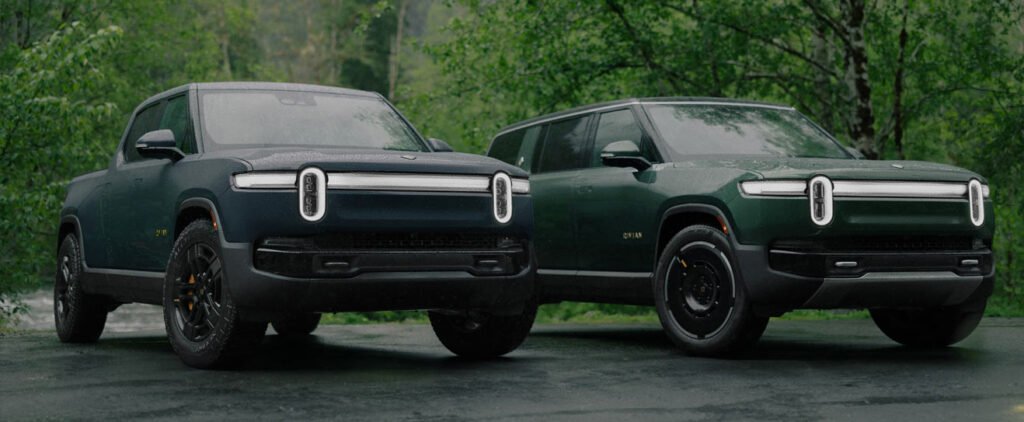
Why you can’t just take it anywhere
Rivian restricts structural and high-voltage repair work to its certified collision network. This isn’t arbitrary gatekeeping — it follows from how the vehicle is built.
The battery pack is structural. On an R1T or R1S the pack isn’t a box bolted underneath; it’s a load-bearing element of the chassis. That means impacts that would be purely cosmetic on a conventional truck can require a documented structural and electrical assessment. It also means a shop has to be able to safely de-energize, support, inspect and re-energize a high-voltage pack — with the training and insulated tooling that requires.
The body is aluminum-intensive. Same constraints as any aluminum vehicle: no heat-and-pull repair, work-hardening you can’t see, self-piercing rivets and structural adhesive instead of spot welds, and a hard requirement that aluminum work be physically separated from steel work to prevent galvanic corrosion.
Parts are gated. Rivian supplies structural and high-voltage components through the certified network. A non-certified shop often simply cannot buy the part.
Procedures live in Rivian’s system. Certified shops pull the current published procedure for each operation. Working from general collision experience isn’t sufficient on a vehicle this new — the procedures change.
We’re part of the Rivian Certified Collision Network in New Rochelle, which is why we can source the parts, follow the procedures and do the high-voltage work in-house.
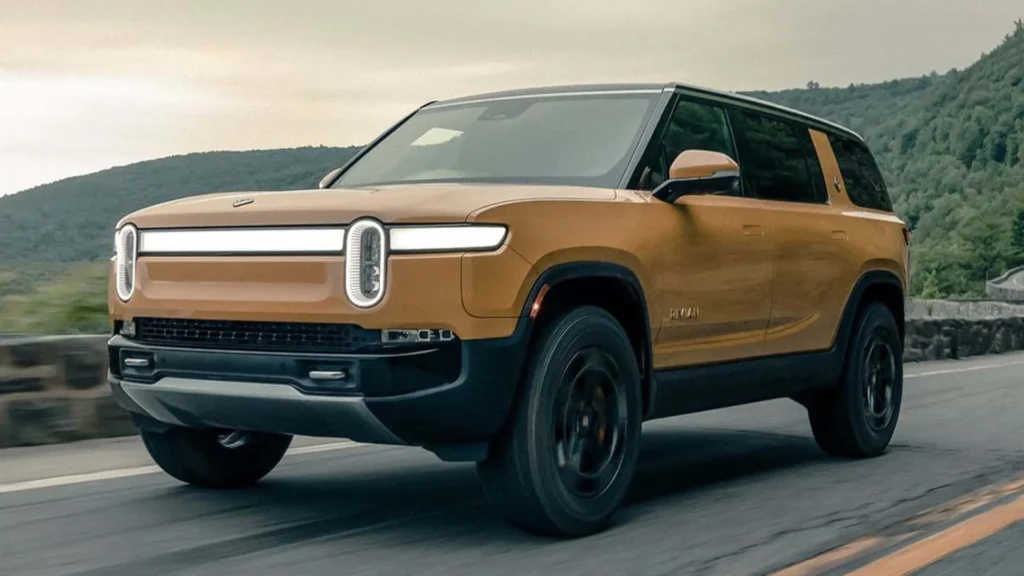
What a Rivian repair actually involves
The high-voltage assessment comes first
Before any body work starts, the vehicle gets a documented high-voltage inspection: physical damage to the pack enclosure, evidence of thermal events, isolation fault checks, coolant loop integrity, and the state of the high-voltage interlock system.
This drives everything downstream. A pack that passes inspection means the repair proceeds as a body repair. A pack with damage above the manufacturer’s threshold can turn a visually moderate accident into a total loss, because pack replacement cost can approach a substantial fraction of the vehicle’s value.
This is why an early, honest assessment matters so much on an EV. If the truck is going to be a total, you want to know in week one, not week nine — every week of storage and rental you spend before that determination is money you don’t get back.
Structural repair
Aluminum structure, rivet-bonded and adhesive-joined, repaired to Rivian’s published procedure with genuine parts, in a dedicated aluminum area. Measured on three-dimensional frame equipment before and after, with documentation.
ADAS and sensor recalibration
Rivian’s driver-assistance suite runs on a camera and radar array plus ultrasonic sensors, and the R1T and R1S carry a lot of them — front, rear, corners, mirrors. Bumper and windshield work almost always triggers a recalibration requirement. As with any ADAS repair: the system won’t tell you it’s misaimed. It’ll report healthy and be wrong. Insist on the calibration report in your paperwork.
Paint
Rivian’s colors — El Cap Granite, Rivian Blue, Launch Green, LA Silver, and the Limestone and satin finishes — are not simple colors to match. Multi-stage metallics need spray-out cards and variant matching under multiple light sources, and blending into adjacent panels rather than stopping at the seam.
The satin finishes have their own rule: satin and matte paint cannot be polished. A shop that tries to buff a blemish out of a satin panel has ruined it and now owes you a refinish.
The timeline question
Let’s be realistic rather than reassuring.
| Damage type | Typical timeline |
|---|---|
| Cosmetic panel / bumper cover | 1–3 weeks |
| Moderate, non-structural, with sensor replacement | 3–6 weeks |
| Structural, no pack involvement | 6–12 weeks |
| Structural with high-voltage work | 10+ weeks, parts-dependent |
The variable is almost always parts, not labor. Rivian is a young manufacturer with a supply chain sized to current production, and the aftermarket doesn’t exist for structural or high-voltage components. Timelines have improved considerably as the certified network has grown and parts availability has stabilised, but a single backordered casting can still add a month.
What actually shortens the wait: an early teardown so every part gets ordered on day three rather than day thirty. This is the most consequential thing a shop controls, and it’s the main difference between a well-run Rivian repair and a bad one. Ask the shop when they plan to tear the vehicle down. “After the adjuster approves” is a warning sign.
Insurance: two things to handle up front
Rental and loss-of-use coverage. Standard rental coverage on a lot of policies is capped at 30 days or a fixed dollar amount. On a structural Rivian repair that cap can expire while the truck is still in a bay. Check the cap now, and if you’re buying or renewing, consider extending it — it’s cheap relative to what three months of a comparable rental costs.
Your right to choose the shop. Under New York Insurance Law § 2610(a), an insurer “shall [not] require that repairs be made to such vehicle in a particular place or shop or by a particular concern,” and under § 2610(b) the insurer is not to recommend or suggest a shop unless you ask. Connecticut and New Jersey have comparable rules. Details here.
This matters especially on a Rivian, because a “preferred network” shop that isn’t Rivian-certified can’t source the parts or perform the high-voltage work — and the thing that happens next is the vehicle sits there for three weeks before it gets moved to a shop that can. Naming a certified facility at the first phone call avoids that entirely.
We handle the claim, estimate, supplement and insurer negotiation directly.
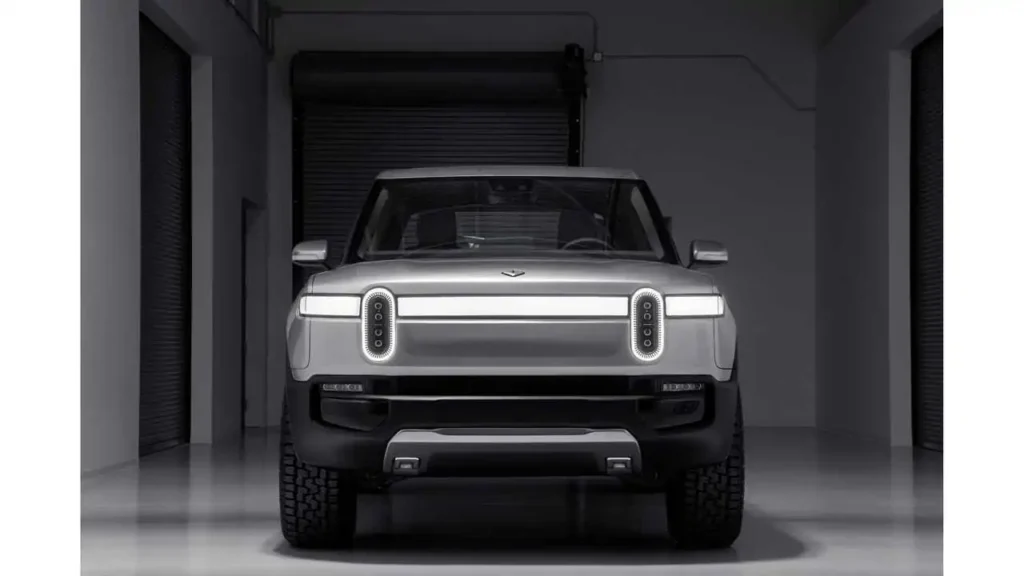
Protecting an R1T or R1S after the repair — and before the next one
A few things specific to these trucks.
They’re aluminum, and you drive them in brine. Westchester, Fairfield County and Bergen County roads get liquid magnesium chloride from December through March. A rock chip on an aluminum panel is a corrosion initiation site, not just a cosmetic flaw. On a vehicle you plan to keep, this is a real argument for paint protection film on the hood, front fascia and — especially — the rockers and lower doors, which take the worst of the spray and are almost always skipped.
They’re tall and flat, which means stone strikes land differently. The upright front fascia on an R1S and the R1T’s hood take direct hits rather than glancing ones. Coverage that stops at the leading third of the hood leaves the part that actually gets hit exposed.
If you have a satin or Launch Edition finish, film it. Satin paint has no recovery path from scratches — it can’t be polished. XPEL Stealth film over satin paint gives it the sacrificial layer it otherwise doesn’t have. This is the single highest-value protective step on those trucks.
Timing matters if you’re doing it after a repair. Refinished panels need to outgas before film goes over them. The correct sequence is refinish → cure → correct → film. When the body work and the film happen in the same building, the shop knows exactly when each panel was sprayed.
Frequently asked questions
For structural and high-voltage work, effectively yes. Rivian supplies those parts and publishes those procedures through its certified collision network, so a non-certified shop generally cannot source the components or perform the high-voltage operations safely and to specification. Minor cosmetic work is less restricted, but on a vehicle where the battery pack is structural, the line between cosmetic and structural is not always where it looks.
Three reasons compound. The aluminum-intensive structure requires specialized joining and a dedicated repair area. The structural battery pack means impacts near it require documented high-voltage assessment and, above a damage threshold, replacement. And parts come only from Rivian with no aftermarket alternative, so there is no cost pressure on part prices.
Cosmetic work runs one to three weeks. Structural repair commonly runs six to twelve weeks, and longer where high-voltage work is involved. The controlling factor is almost always parts availability rather than shop labor, which is why an early teardown — so parts get ordered immediately — is the single best predictor of a shorter repair.
It can. A battery pack damaged beyond the manufacturer’s repair threshold is replaced rather than repaired, and pack replacement cost can push the total repair past the vehicle’s actual cash value even when the body damage looks moderate. This is why an early, documented pack assessment matters.
A repair performed by a certified facility using genuine parts and published procedures, with documentation, should not affect your factory warranty on unrelated systems. Improper high-voltage work is a different matter entirely and is a strong argument for staying inside the certified network.
It is one of the better cases for it. The aluminum body panels make rock chips a corrosion concern rather than a cosmetic one in a road-salt climate, the upright front-end geometry means stones hit square, and the satin finishes cannot be polished so they have no other route to recover from damage.
Talk to a certified shop
Enthusiast Auto Works is part of the Rivian Certified Collision Network in New Rochelle, New York, with factory-trained technicians, high-voltage capability, a dedicated aluminum repair area, in-house ADAS calibration and an XPEL installation bay.
Free pickup and delivery across Westchester, the Bronx, Manhattan, lower Fairfield County and Bergen County.
55B Plain Ave, New Rochelle, NY 10801 — (914) 630-1668
Start a claim · Rivian certification details · The complete accident repair guide
Where we come to you
We are at 55B Plain Ave, New Rochelle, NY 10801, and a Rivian collision repair does not mean you have to drive the car to us. Free pickup and delivery covers roughly a forty-mile radius, and the vehicle does not have to be drivable.
Westchester County: New Rochelle, Larchmont, Mamaroneck, Rye, Harrison, Scarsdale, Bronxville, Eastchester, Tuckahoe, Pelham, White Plains, Mount Vernon, Yonkers, Port Chester, Purchase, Armonk, Chappaqua, Bedford and Katonah.
New York City: Manhattan, the Bronx, Riverdale and Queens.
Fairfield County, CT: Greenwich, Cos Cob, Riverside, Old Greenwich, Stamford, Darien, New Canaan, Norwalk and Westport.
Bergen County, NJ: Alpine, Tenafly, Cresskill, Demarest, Englewood, Englewood Cliffs, Fort Lee, Closter and Saddle River.
Rockland County: Nyack, Pearl River and Montebello.
(914) 630-1668 · Arrange pickup
Request an Estimate
Tell us about the car and what happened. We will call you back, usually the same business day.
If your vehicle has paint protection film on it
Most collision shops cannot finish the job. They can repair and repaint the panel, but they cannot put the film back, because that is a separate trade with a separate certification. The car goes to a second facility afterward — a second drop-off, a second wait, and nobody answerable if the result does not match.
We do both in the same building. To our knowledge, Enthusiast Auto Works is the only collision facility in New York, New Jersey or Connecticut holding Rivian collision certification, Land Rover collision certification and XPEL Certified Installer status at the same time. A filmed vehicle is stripped, repaired, refinished, cured and re-filmed here without moving.
Other certified shops in the area send us their customers’ cars for the film work once their paint is done. If the film has to come back to us anyway, you can simply start here.
How collision repair works on a car with paint protection film